How to Prepare for the Red Seal Mechanic Exam in Canada
Red Seal certification is one of the most recognized credentials for mechanics in Canada. It tells every employer, in every province, that you've met a national benchmark. And with demand for certified mechanics and automotive technicians continuing to outpace supply, the credential is more valuable than ever.
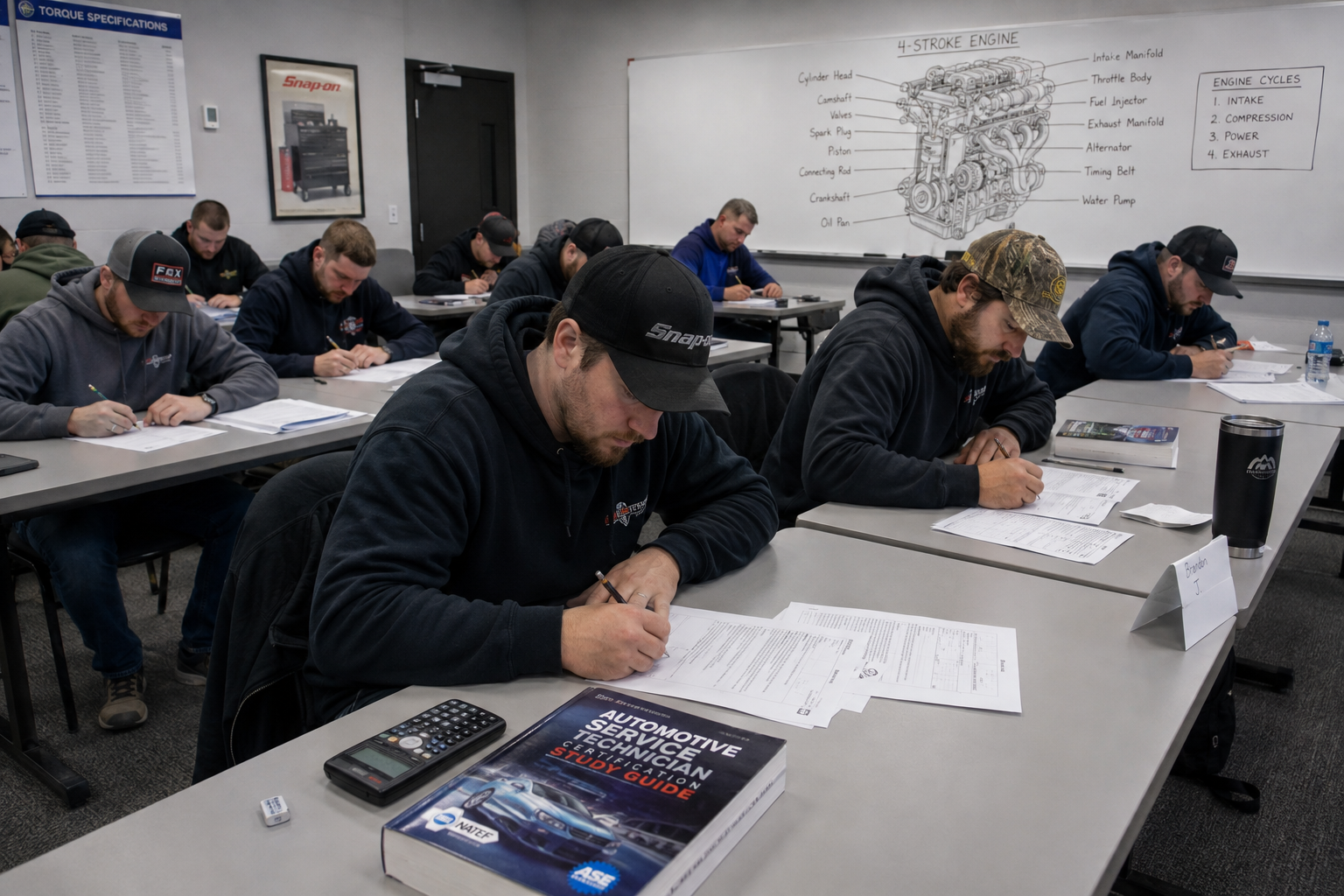
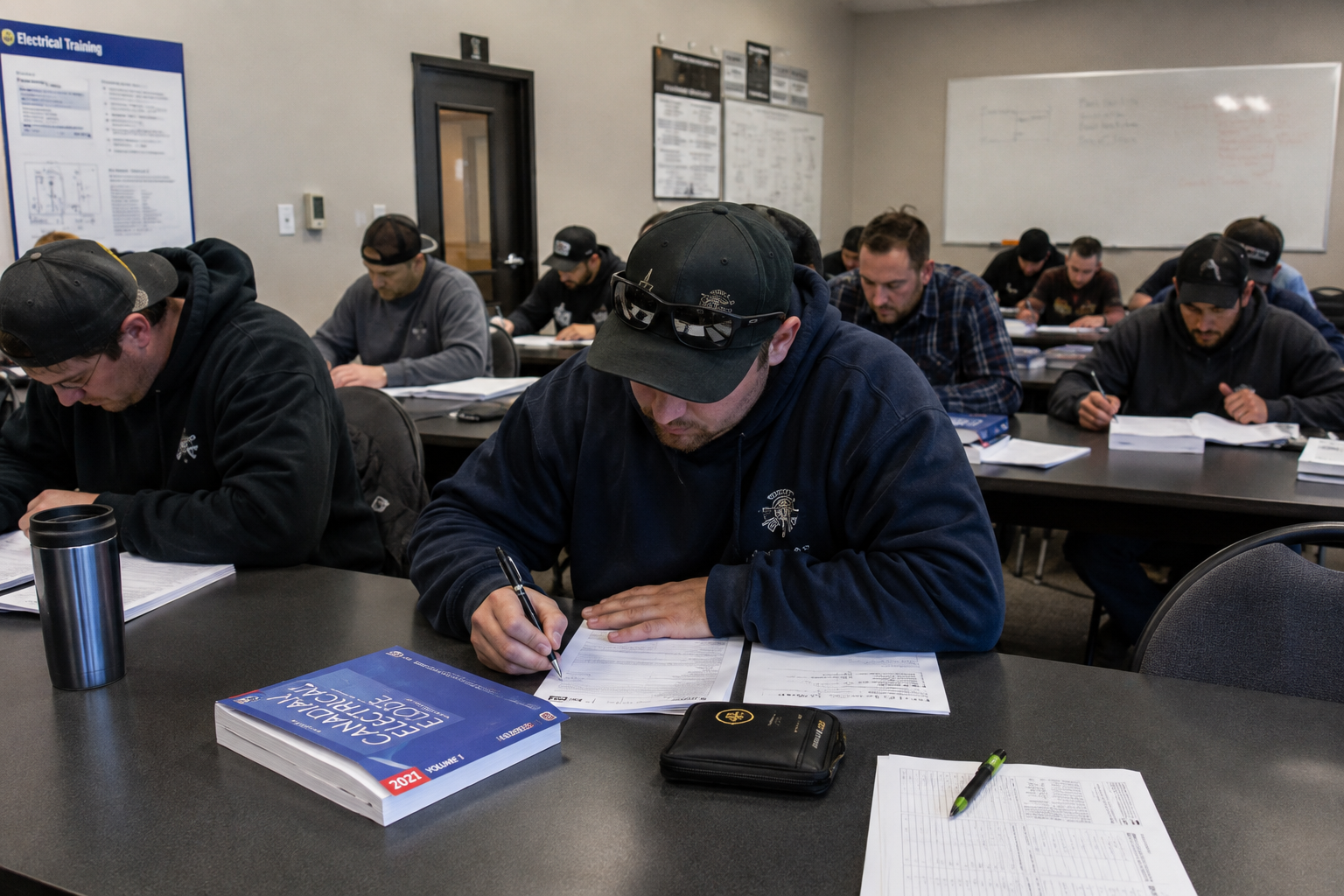
But the exam itself? It challenges many candidates who assume shop experience alone will carry them through. It won't. The Red Seal mechanic exam is written and multiple-choice, and it covers the full scope of your trade. Diagnostics, electrical systems, HVAC, braking, ADAS, and other core trade areas.
Whether you're finishing an apprenticeship, challenging the exam based on work experience, or coming through as a foreign-trained mechanic looking for interprovincial certification, the preparation process is the same. You need a plan, and you need to start sooner than you think.
From a career perspective, the benefits are significant. Journeypersons with a Red Seal endorsement consistently earn more, move between provinces with fewer administrative barriers, and get first consideration for senior shop roles. It's one of the most practical credentials in the skilled trades.
What Is the Red Seal Mechanic Exam?
The Red Seal Program, formally known as the Interprovincial Standards Program, is a national initiative that establishes consistent competency standards across participating provinces and territories. When you pass the exam and earn your Certificate of Qualification with a Red Seal endorsement, that credential is recognized across participating jurisdictions.
For mechanics, the most common destination is the Automotive Service Technician trade, but the program covers a range of occupations. Each has its own exam, occupational standard, and expectations. Mechanic certification in Canada has historically been managed at the provincial level, creating friction when tradespeople moved. The Red Seal Program solves that by providing interprovincial trade certification — a single nationally recognized standard.
You can find the official program details at the Red Seal Program website.
Automotive Service Technician and Other Red Seal Mechanic Trades
Not all mechanic credentials are the same within the Red Seal Program. Before you start studying, make sure you're preparing for the right exam.
Table 1: Common Red Seal Mechanic Trades
| Trade | Main Focus |
|---|---|
| Automotive Service Technician | Cars and light vehicles |
| Heavy-Duty Equipment Technician | Heavy equipment and machinery |
| Truck and Transport Mechanic | Commercial trucks and transport vehicles |
| Industrial Mechanic Millwright | Industrial machinery and maintenance |
Each of these is a separate credential. Study materials, exam content, and even the diagnostic scenarios will differ significantly between them. If your background is in automotive repair shops, the Red Seal Automotive Service Technician exam is your target. If you've spent your career on excavators and loaders, that's a different path entirely.
Who Can Write or Challenge the Red Seal Mechanic Exam?
There are several ways to become eligible, and which one applies to you depends on your background and province.
Apprenticeship completion. The most common route. You complete a registered apprenticeship in your province, meet the required training hours and on-the-job experience, and your provincial authority clears you to write. Apprenticeship completion requirements vary — Alberta, Ontario, and BC each have their own structure.
Challenge exam pathway. If you've never done a formal apprenticeship but have significant work experience in the trade, some jurisdictions may allow challenge pathways, subject to provincial rules. You'll need to document your hours (typically 8,000-10,000) and demonstrate that your experience covers the trade's full scope, not just one area.
Foreign-trained mechanics. This is where Canada’s skilled trades system can offer a clear pathway. If you trained and worked as a mechanic outside Canada, the challenge exam pathway is available to you. Your credentials will need to be assessed, and you'll need to show that your work experience meets provincial eligibility requirements. It takes some paperwork, but it's a well-used route. Plenty of internationally trained mechanics have come through this way and earned their interprovincial certification.
Always confirm eligibility details with your provincial apprenticeship office. The requirements are specific, and they do change.
Red Seal Mechanic Exam Format Explained
Here’s what to expect on exam day.
Table 2: Red Seal Mechanic Exam Overview
| Factor | Details |
|---|---|
| Exam type | Multiple choice |
| Questions | 100–150 |
| Passing score | 70% |
| Time limit | Approximately 4 hours |
| Main topics | Diagnostics, engines, troubleshooting |
Four hours sounds like a lot until you’re working through a scenario-based diagnostic question that requires you to reason through three possible causes before picking one. The time goes quickly. Pacing matters more than most candidates expect.
The passing score is 70%. This score is attainable, but only if you've studied the full range of topics. Multiple-choice format rewards solid foundational knowledge. You can’t get through it with only partial understanding.
Main Topics Covered on the Mechanic Red Seal Exam
The exam tests more than one or two automotive systems. It covers your entire trade.
Table 3: Common Exam Sections
| Topic | Description |
|---|---|
| Engine systems | Diagnostics and repair |
| Electrical systems | Sensors, batteries, wiring |
| Brakes and suspension | Vehicle safety systems |
| Diagnostics | Troubleshooting procedures |
| Transmission systems | Automatic and manual transmissions |
| HVAC and fuel systems | Heating, cooling, fuel delivery basics |
Electrical systems and diagnostics carry heavy weight on the exam. Mechanics who've spent years in one bay doing oil changes and brake jobs often find these sections the hardest — not because the content is inaccessible, but because they haven't had to think through electrical faults or systematic troubleshooting on a daily basis. Know your weak spots before exam day.
Why Diagnostic Skills Matter
Diagnostics is the area where the exam separates prepared candidates from everyone else. It's not testing whether you know what a crankshaft position sensor does. It's testing whether you can work through a symptom, narrow down the likely cause, and identify the right next step — all without touching the vehicle.
The troubleshooting approach that works in the shop also works on the exam. Read the symptom. Ask what conditions trigger it. Think about which systems are involved. Eliminate what doesn't fit before you commit to an answer.
Where candidates make mistakes is in identifying system failures without understanding why they occur. If a question gives you a lean fuel trim code and a rough idle, the ABS module would generally not be the most relevant area to consider. Keeping your diagnostic logic grounded in how systems interact, rather than guessing based on what you've seen before, is what gets you through the harder questions.
Real-world diagnostic scenarios appear throughout the exam. Your shop experience is genuinely useful here. The challenge is learning to translate hands-on intuition into structured reasoning on paper.
Best Ways to Prepare for the Red Seal Mechanic Exam
Study Guides
Start with the Red Seal Occupational Standard for your specific trade. Download it directly from the Red Seal Program website. This document outlines every task and sub-task the exam can cover — it's essentially the exam blueprint. Go through it task by task. If you can't explain something clearly in your own words, that's a gap worth addressing.
Trade-specific textbooks written for Canadian apprenticeship programs are worth having. They're structured around the same competencies the exam tests and use the right terminology.
Practice Exams
A Red Seal mechanic practice exam is one of the most efficient study tools you have access to. Reading material passively is one thing. Answering questions under time pressure is another — it forces your brain to actually retrieve information rather than recognize it.
Look for an automotive service technician Red Seal practice exam aligned with the current occupational standard. Older materials may include terminology or specs that don't reflect current exam content, creating more confusion than clarity.
Mock Tests
Full-length mock exams are different from doing 20 practice questions at a time. Sitting through 120 to 150 questions in a single session teaches you how to pace yourself, manage mental fatigue, and notice when your attention declines. Most people who run out of time on the actual exam have never practiced completing a full test under real conditions.
Do at least three or four complete mock exams before your exam date. Review every wrong answer carefully — understanding the reasoning behind the correct answer is what can actually improve your score.
Diagnostics Training
If your shop experience is narrow, you need to expose yourself to diagnostic scenarios outside your normal work deliberately. Study scan tool data interpretation. Walk through case studies involving electrical faults, emissions issues, and driveability complaints. The heavy-duty mechanic Red Seal practice exam, for example, will expect comfort with diesel diagnostics and hydraulic systems — areas that automotive-focused mechanics don't always encounter.
Flashcards and Review Methods
Flashcards work particularly well for electrical specifications, fluid capacities, torque values, and system relationships. Spaced repetition — reviewing material at increasing intervals — helps move material into long-term memory more reliably than rereading the same page three times.
Time Management During Preparation
Build a study schedule eight to twelve weeks out. Shorter, focused sessions — 45 to 60 minutes — tend to stick better than long, unfocused review blocks. Spend more time on weak areas, but don't completely abandon the sections you're already strong in.
Preparation Checklist
Before you book your exam, review the following checklist:
-
Review engine diagnostics procedures and common fault patterns
-
Practice troubleshooting questions across all major systems
-
Study brake and suspension systems, including safety specifications
-
Complete at least three full-length mock exams under timed conditions
-
Review electrical system basics: sensors, circuits, and battery testing
-
Practice pacing: target roughly 30 questions per hour
-
Identify weak areas from mock exam results and allocate additional study time
-
Review the Red Seal Occupational Standard task list for your trade
Red Seal Mechanic Practice Questions and Mock Exams
The format of Red Seal exam questions, automotive service technician-style, is worth understanding before you sit down with practice materials for the first time.
These aren't simple recall questions. A lot of them are scenario-based — you get a customer complaint, a couple of diagnostic findings, maybe a scan tool reading, and you have to determine the most likely cause or the correct next step. They're designed to test applied reasoning, not memorization.
Common formats you'll encounter include symptom-based diagnostic questions, specification recall, and procedure sequencing. "Which step should be performed first?" questions are more common than people expect, and they reward candidates who understand the logic behind diagnostic procedures rather than just the procedures themselves.
Mock exams improve confidence by making the format familiar: you stop being surprised by the format. The questions on the real exam will be different, but after completing a substantial number of practice questions, the format will feel familiar. You’ll spend less mental energy figuring out how the test works and more energy reasoning through the questions.
For candidates who want structured repetition, platforms like WorkUgo offer trade-specific practice questions and mock exams designed to help identify weak areas before exam day.
Automotive vs Heavy-Duty Mechanic Red Seal Exams
These are separate credentials with meaningfully different content. Don't assume preparation for one translates directly to the other.
Table 4: Automotive vs Heavy-Duty Mechanic Exams
| Area | Automotive Mechanic | Heavy-Duty Mechanic |
|---|---|---|
| Main equipment | Cars and light vehicles | Heavy machinery and trucks |
| Main systems | Engines, brakes, diagnostics | Diesel systems, hydraulics |
| Work environment | Automotive repair shops | Industrial and transport environments |
The automotive service technician Red Seal exam focuses on light vehicle systems: gasoline engines and standard brake and suspension components. The heavy-duty mechanic Red Seal practice exam delves into diesel fuel systems, hydraulic circuits, and diagnostics of large-scale equipment. Those are different knowledge sets.
Similarly, the truck and transport mechanic Red Seal exam covers commercial vehicle regulations and transport-specific systems. Red Seal industrial mechanic millwright exam prep shifts the focus entirely toward industrial machinery, alignment procedures, and plant maintenance. Choose your credential, then build your study plan around the specific occupational standard for that trade rather than relying on unrelated materials.
Free Resources for Red Seal Mechanic Exam Preparation
Effective preparation does not necessarily require significant expense. Several strong resources are free:
Red Seal Program Resources — The Occupational Standard and Examination Guide for your trade are available as free downloads. These are the most important documents you can have. The Examination Guide tells you exactly how questions are distributed across task areas, which helps you figure out where to focus.
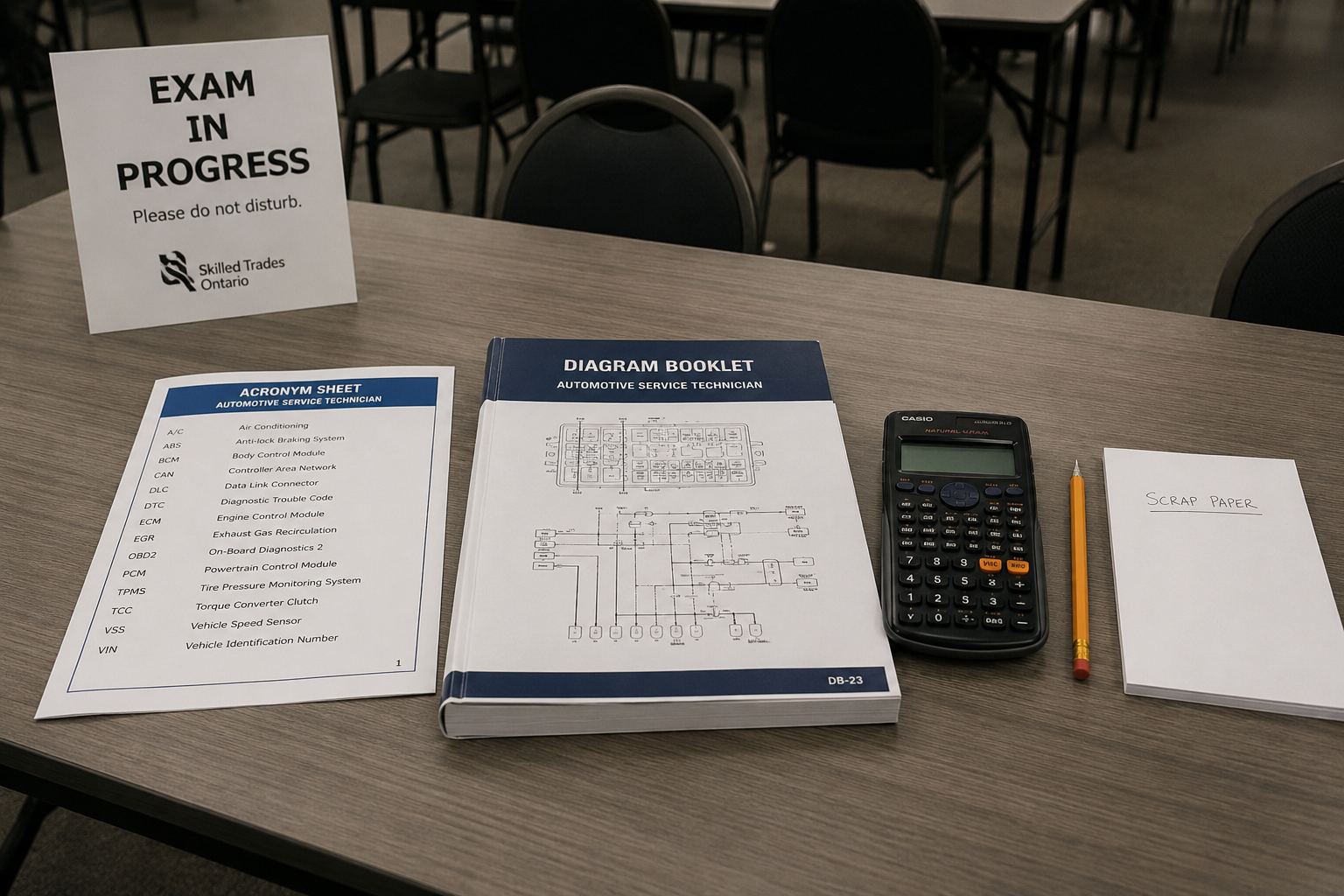
SkilledTrades Ontario — Ontario's trades authority publishes study resources, exam information, and preparation materials for apprentices and challengers.
SkilledTradesBC — BC's authority offers similar support and can connect you with provincial exam preparation resources.
Beyond these, provincial apprenticeship authorities sometimes run prep workshops, and your local union or training centre may offer access to mock exams. Do research — these resources exist, and they are often underutilized.
The Occupational Standard is especially important. It lists every task covered by the exam. Work through it systematically, and you'll know exactly what you're expected to understand, in the language the exam actually uses.
Common Diagnostic Mistakes
Several common patterns appear among candidates who don't pass on the first attempt.
Rushing through diagnostic questions. Time pressure makes people commit to answers before they've fully read the question. In a scenario-based question, skipping a single detail can lead to an incorrect answer. Slow down on diagnostics questions specifically.
Ignoring system relationships. Vehicles are interconnected. A vacuum leak affects fuel trim. A weak battery can cause transmission shift issues. An electrical fault can appear to be a sensor problem. Candidates who think in isolated systems miss questions that require them to see how two systems interact.
Memorizing answers instead of understanding them. Practice exams help a lot, but only if you understand why the correct answer is correct. If you're pattern-matching from a practice question you've seen before, a slightly different scenario can cause confusion.
Weak troubleshooting logic. Many candidates can identify what's wrong. Few can explain the diagnostic chain that leads there. The exam tests both.
Poor time management. This issue can be prevented with mock exam practice. Know your pace before exam day.
How Difficult Is the Red Seal Mechanic Exam?
The exam is often more difficult than candidates expect. However, it is manageable with preparation.
The technical difficulty is real, especially in diagnostics and electrical. These sections require a kind of systematic reasoning that doesn't always come naturally to tradespeople accustomed to working with their hands. On the shop floor, you can check something, get feedback, and adjust. On the exam, you have to reason through the whole scenario before you commit.
Practical experience remains a significant advantage. The exam is designed to reflect real trade work, so if you've genuinely done the job, the scenarios will feel familiar. The preparation process is about converting that hands-on knowledge into exam-ready reasoning, not starting from scratch.
Passing strategies that actually work: start with the sections you know best to build momentum and pace, use elimination on questions you're unsure about, and don't override your first instinct on answers you were confident about. Second-guessing yourself on 20 questions is a reliable way to lower your score.
The candidates who pass are usually the ones who took preparation seriously six to ten weeks out, did full mock exams, and focused specifically on their weak areas. This is a consistent preparation strategy.
FAQ
How hard is the Red Seal mechanic exam?
Harder than many candidates expect. Diagnostics and electrical sections require systematic reasoning, not just recall. Solid preparation (eight to twelve weeks of structured study) makes a significant difference in outcomes.
How many questions are on the Red Seal mechanic exam?
Between 100 and 150 multiple-choice questions, depending on the trade.
What score do you need to pass?
70% or higher.
Can foreign mechanics challenge the Red Seal heavy-duty mechanic exam?
Yes. Foreign-trained mechanics can apply through the challenge exam pathway by documenting relevant work experience and going through a credential assessment. Requirements vary by province, so contact your provincial apprenticeship authority to confirm what applies to your situation.
How long should you study for the Red Seal exam automotive service technician?
Eight to twelve weeks is a reasonable target for most candidates. Those with significant gaps in certain trade areas may want to allow more time.
Is the Red Seal mechanic exam the same in every province?
The exam content is standardized nationally. Administration, eligibility requirements, and scheduling are handled provincially, so there are some differences in the process depending on where you're writing.
Is the mechanic Red Seal exam practical or theoretical?
It's entirely theoretical — written and multiple choice. There's no hands-on component. That said, practical experience still helps you reason through diagnostic scenarios, so it remains highly relevant.
What topics are hardest on the Red Seal mechanic exam?
Electrical systems and diagnostics are consistently the most challenging for candidates. They require applied reasoning across multiple systems rather than straightforward recall, which is why targeted preparation in these areas matters.