
Every Canadian tradesperson eventually runs into the same question. Do I need a provincial certificate, a Red Seal, or both? The answer changes depending on where you work, what trade you are in, and whether that trade is compulsory in your province.
Here is what the two things actually are, and how they line up across Ontario, Manitoba, Quebec, BC, Alberta, and Saskatchewan.
The core distinction
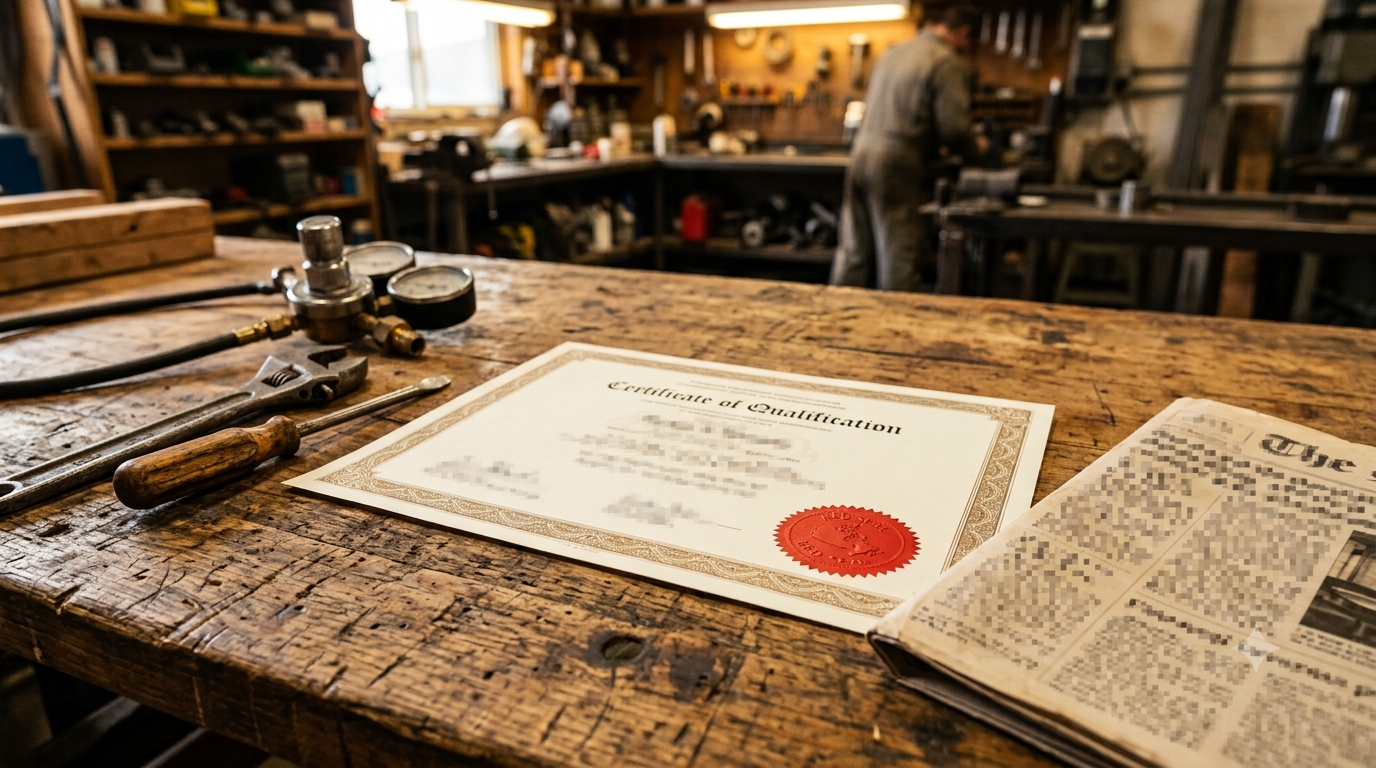
Provincial certification is the document that gives you the legal right to work in a specific trade in a specific province. In most provinces it is called a Certificate of Qualification, or C of Q, and it is issued by your provincial apprenticeship authority. Every province runs its own system, its own exams, and its own list of designated trades.
Red Seal is a national endorsement added on top of your provincial certification. It says you have passed the Interprovincial Standard Red Seal Exam, and it lets you move that certification to any other Red Seal jurisdiction in Canada without rewriting the exam. Red Seal does not replace provincial certification. It travels with it.
In short: provincial certification lets you work at home. Red Seal lets you work anywhere.
One more piece of language worth knowing. A compulsory trade is one where you are legally required to be certified, or a registered apprentice, to work at all. A voluntary trade is one where certification is optional but still valuable. Which trades are compulsory changes from province to province, and that is where most of the confusion starts.
Ontario
Ontario is regulated by Skilled Trades Ontario (STO), created in 2022 under the Building Opportunities in the Skilled Trades Act, known as BOSTA. Your provincial cert is the Certificate of Qualification (C of Q).
Ontario prescribes 144 skilled trades, and 23 of them are compulsory. Plumber, electrician, steamfitter, and hairstylist are examples. To work legally in a compulsory trade you must hold a valid C of Q, hold a Provisional C of Q, or be a registered apprentice under a training agreement. Journeypersons in compulsory trades renew their C of Q every year, and BOSTA inspectors can ask you to produce proof on site.
For any Red Seal designated trade, adding the Red Seal endorsement is your ticket to Alberta, BC, or anywhere else without rewriting the exam. Most Ontario apprentices in a Red Seal trade write the Red Seal exam as their C of Q exam by default.
Quebec
Quebec is the outlier, and skilled tradespeople need to understand why. It runs two separate systems depending on the trade.
Construction trades are regulated by the Commission de la construction du Québec (CCQ). To work on a Quebec construction site you need a certificat de compétence compagnon (CCC), which generally requires around 8,000 hours of experience. Regulated non construction trades, including electrician, refrigeration, plumbing, and heating, are handled through the Ministère (MTESS) and Emploi Québec, which issue a certificate of qualification.
Quebec is fully in the Red Seal system, where it is called the Sceau rouge. Quebec apprentices write the Red Seal in French, and Quebec grants Red Seal certification in 41 of the trades covered by the program. A practical warning: a Quebec CCQ competency certificate does not automatically travel to Ontario or Alberta on its own. The Sceau rouge is what carries your qualification across the country.
British Columbia
BC is regulated by SkilledTradesBC, formerly the Industry Training Authority. Your provincial cert is called the Certificate of Qualification.
BC reintroduced compulsory certification in December 2023, after almost two decades of a fully voluntary system. Seven trades are now compulsory in BC: Construction Electrician, Industrial Electrician, Powerline Technician, Steamfitter/Pipefitter, Refrigeration and Air Conditioning Mechanic, Sheet Metal Worker, and Gasfitter Class A and B. If you work in one of these, you must be a registered apprentice, a certified journeyperson, or a registered Trade Qualifier or Uncertified Experienced Worker with SkilledTradesBC. If you were working in BC before this change, check your trade status, because some previously optional trades now require certification.
Red Seal remains the standard journeyperson exam for most designated BC trades. One BC quirk worth knowing: gasfitters work under a dual regulator system. SkilledTradesBC issues the Certificate of Qualification with Red Seal, and Technical Safety BC issues a separate certificate after you pass its Act, Regulations, and Directives exam. New BC gasfitters need both.
Alberta
Alberta is regulated by Apprenticeship and Industry Training (AIT) under the Skilled Trades and Apprenticeship Education Act. Your provincial cert is the Alberta Journeyperson Certificate.
Alberta has more than 50 designated trades, split into compulsory certification and optional certification. Roughly 18 are compulsory, including electrician, plumber, gasfitter, heavy equipment technician, crane and hoisting equipment operator, and refrigeration and air conditioning mechanic. To work in a compulsory trade you must hold a recognized trade certificate or be a registered apprentice under a certified journeyperson.
Alberta is one of the most Red Seal integrated provinces in Canada. For most trades, the Red Seal exam is the provincial exam. Pass it once, and you walk away with both provincial legal authority and national mobility in a single document.
Manitoba
Manitoba is regulated by Apprenticeship Manitoba under the Apprenticeship and Certification Act. Your provincial cert is a Certificate of Qualification.
Manitoba has more than 55 designated trades and nine compulsory ones. These include Construction Electrician, Industrial Electrician, Crane and Hoisting Equipment Operator, Refrigeration and Air Conditioning Mechanic, Sprinkler Fitter, and Steamfitter Pipefitter, along with several personal service trades such as Hairstylist and Esthetician. For a compulsory trade you must be a registered apprentice or a certified journeyperson to work legally.
For Red Seal designated trades, Manitoba uses the Red Seal exam as its final journeyperson exam, so passing at 70 percent earns you the Certificate of Qualification and the Red Seal endorsement together. Manitoba is also known as one of the friendlier provinces for trade qualifiers coming in from another province or from abroad.
Saskatchewan
Saskatchewan is regulated by the Saskatchewan Apprenticeship and Trade Certification Commission (SATCC), an industry led, arms length body. Your provincial cert is the Journeyperson Certificate of Qualification.
Saskatchewan has more than 45 designated trades and five compulsory ones: Construction Electrician, Plumber, Refrigeration and Air Conditioning Mechanic, Sheet Metal Worker, and Sprinkler Fitter. Those five must go the apprenticeship route to certify. Everything else is voluntary, meaning training is encouraged but not legally required to work.
Red Seal is fully integrated as the standard exam, and SATCC has a practical, well used pathway for trade qualifiers with out of province or foreign experience to challenge the certification exam.
Which one should you pursue?
If you plan to spend your career in one province, and your trade is voluntary there, provincial certification alone is legally sufficient. If your trade is compulsory in your province, provincial certification is mandatory, full stop. You cannot legally work without it.
For every Red Seal designated trade, though, the honest answer is simple: write the Red Seal exam anyway. In most provinces the Red Seal exam is already the default provincial exam, so it costs you nothing extra, and it multiplies your job market the day you pass.
Your provincial certificate protects your right to work. Your Red Seal protects your right to work anywhere.